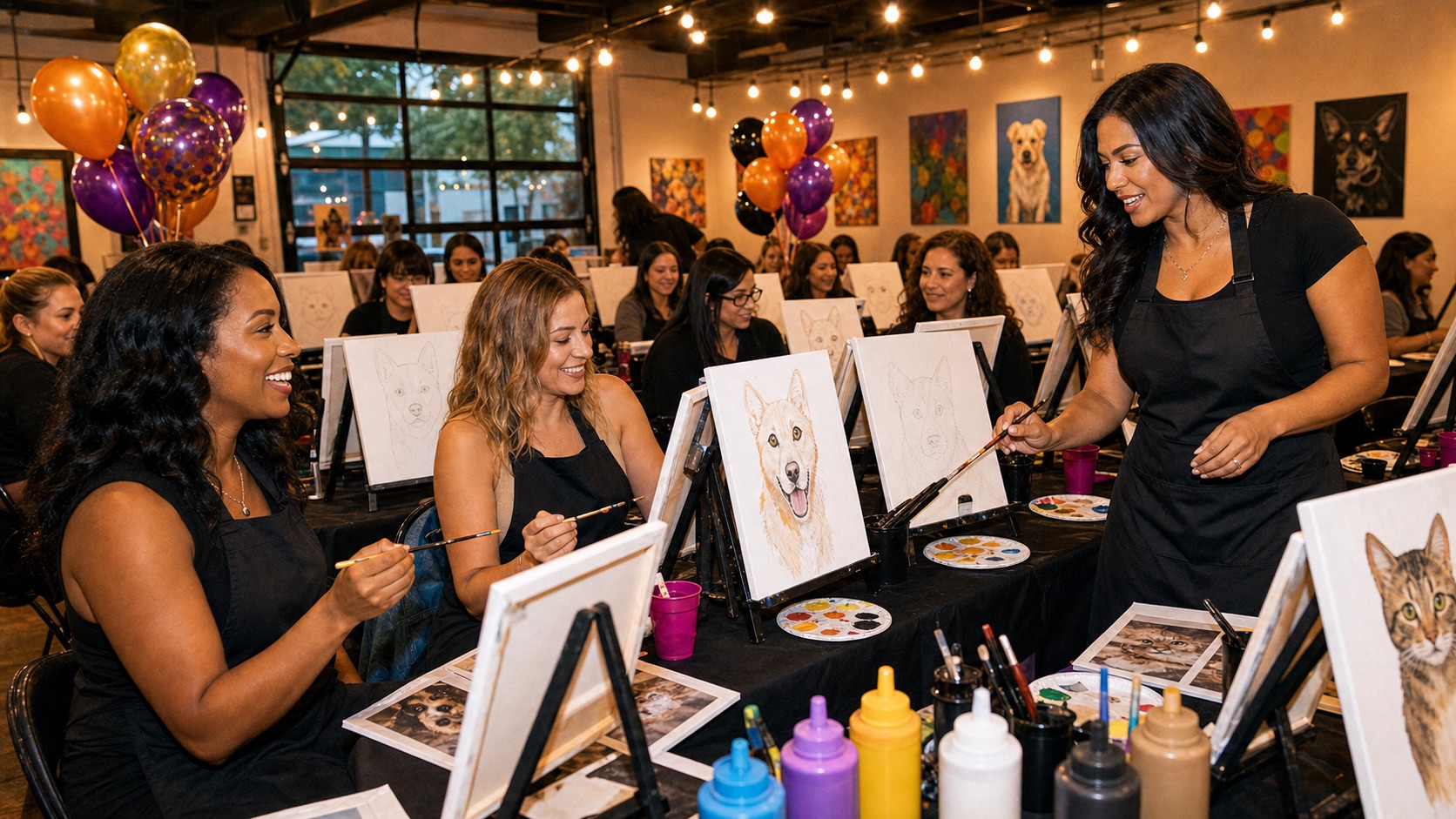
You can paint your pet as a beginner. Choose a class if you want a prepared canvas and someone nearby to help, or paint at home if you would rather work at your own pace. Start with a clear photo, keep the first portrait simple, and check what preparation is included before buying anything.
The hardest part might be choosing from the 800 photos of your dog asleep in almost the same position. The painting does not have to be.
This guide will help you choose a way to paint, pick a photo that makes the job easier, and understand what actually happens at a paint-your-pet class. If you already know you want an instructor, browse paint-your-pet classes, then open the studio’s own calendar for current dates.
Ready to work with your own photo? Try your pet photo to choose a stencil or numbered guide. Creating your own artwork requires sign-in and payment; paints and canvas are not included.
What does “paint your pet” mean?
It usually means making a portrait from your own pet photo. The phrase covers a few different experiences, so take a moment to read the description.
A guided studio class may start with an outline prepared by an artist. A paint-by-numbers project divides the image into numbered shapes with a matching colour key. A freehand portrait asks you to draw or sketch the image yourself before painting.
Those are different amounts of help. A prepared outline answers “where does the ear go?” A numbered template also answers “which colour goes here?” An instructor can help you decide what to do when the brown you mixed looks nothing like your brown dog.
For example, Painting with a Twist describes a class where artists sketch the pet before the guest arrives. Pinot’s Palette’s Project Pet uses a grayscale image printed on canvas and a custom palette. Both welcome beginners. Neither description means every pet class is paint by numbers.
Class or home project: which should you choose?
Pick the experience that solves the part you are least excited to do yourself.
| If this sounds like you | Start here | Check before committing |
|---|---|---|
| “I want someone to help with the painting.” | A guided studio class | How the canvas is prepared and what instruction is included |
| “I want a personal project I can pause.” | A home paint-by-numbers project | Whether you receive a digital file, supplies, or both |
| “I already paint and want more freedom.” | An outline or freehand portrait | Whether you want a realistic, loose, or colourful finish |
| “I want to do this with friends.” | A public class or private group booking | Whether everyone can paint their own pet and sit together |
A class takes some preparation off your plate, but you need to meet the photo deadline and arrive at a fixed time. At home, you choose the pace, but printing, paint matching, and setting up may be your jobs.
Our recommendation for a nervous first-timer: choose a class that clearly explains its canvas preparation. If you already enjoy a quiet craft project, a numbered portrait at home may suit you better.
Choose a photo you can actually paint from
Your favourite photo and your easiest painting reference might be different photos. The blurry zoom of your cat stealing a sandwich has excellent storytelling. It has less useful information about the cat’s face.
For a first home portrait, try a clear image of one pet with the head and any distinctive ears fully visible. Give the face enough room in the picture that you can see the eyes, nose, and markings without guessing.
Look for three things:
- Visible features. The eyes and nose should be easy to distinguish from the fur around them.
- Useful light. Choose a picture where detail remains visible in both the dark and light parts of the coat.
- A manageable background. Your pet should be easy to separate from the sofa, garden, or pile of laundry.
Pinot’s Palette Appleton’s photo guide recommends clear, high-resolution photos, unobstructed features, and daylight in shade or near a window. It is an older guide, so use it for photo advice rather than current event details.
For a booked class, send the photo the studio asks for. Some want an uncropped image so they can choose the composition themselves. Keep the original file even if you experiment with a closer crop for a home project.
What if your pet has black or white fur?
Look at the picture before worrying about paint colours. Can you tell where the cheek ends and the neck begins? Can you see the nose against the muzzle?
For a dark pet, try a photo where light reveals the shape of the face without turning the eyes into bright reflections. For a white pet, avoid a picture so bright that the face becomes an empty white patch.
You are looking for visible differences in light and shadow. Do not judge the image only by whether the fur colour looks accurate on your phone. A photo can capture “black dog” perfectly and still give you very little information to paint.
If you have two possible photos, show both to the instructor. A quick choice before class is easier than trying to invent a hidden eye later.
What happens at a paint-your-pet class?
The exact steps depend on the studio, but here is a useful way to read the booking process.
Before class: you book, submit a photo, and follow any request for a replacement. Keep the confirmation so you can check the date, address, and upload instructions.
When you arrive: check that the canvas is yours and that your reference picture is available. Ask what the instructor wants you to paint first. This is a very reasonable question. You are not meant to arrive knowing the teaching plan.
During class: the instructor may demonstrate backgrounds, colour mixing, or facial details. Because each guest has a different pet, some help may happen at your seat rather than in one demonstration everyone copies.
Before you leave: ask how to carry the painting and whether it needs more drying time. If it is unfinished, ask which areas to complete next and whether any take-home supplies are available. Do not assume they are included.
Seven things to check before booking
The event name is the invitation. The details tell you whether the evening will work for you.
- Photo deadline: when must the studio receive a usable image, and will it confirm receipt?
- Canvas preparation: is it sketched, printed, numbered, or something else?
- What is included: canvas, paint, brushes, apron, instruction, and any drinks or food?
- Pet limit: can you paint two pets, and does that change the price or preparation?
- Age and venue rules: are children welcome, and what is the alcohol policy?
- Changes and cancellations: what happens after the custom canvas has been prepared?
- Access and comfort: is the room accessible, and can you request a suitable seat or extra assistance?
Policies vary. Creative Color Art Studios, for example, asks for a photo at least three days ahead and says it will confirm suitability. Treat that as one studio’s process, not a deadline that applies everywhere.
“Paint your pet” also does not automatically mean “bring your pet.” Check with the venue before arriving with your co-artist on a lead.
How to find a paint-your-pet class near you
Start with the paint-your-pet class directory. Choose a relevant studio or city, then follow the official website or booking link.
Check the specific event, not just the studio homepage. A studio might offer pet portraits occasionally while most of its calendar shows shared painting themes. Look for a future date, available seats, the right location, and clear photo instructions.
If no pet event is listed, contact the studio through its official website to ask about the next one or a private group. Avoid booking a regular paint party and assuming staff can turn it into a custom portrait session on arrival.
Keep travel time in the decision too. The closest studio is useful only if its format, date, and support suit what you want to make.
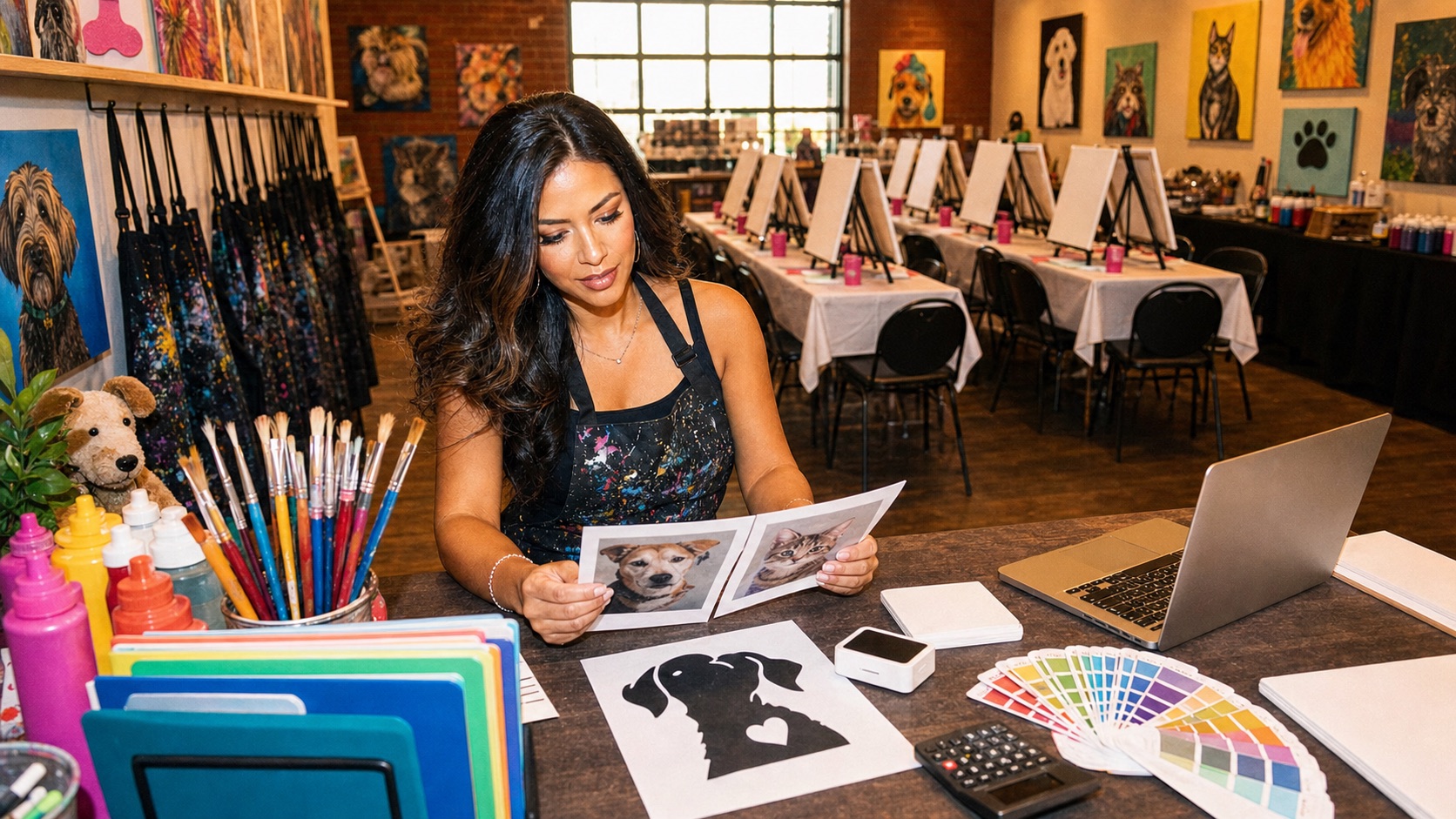
AI-generated editorial illustration of portrait preparation; not a demonstration of our engine or a tested photo-to-painting result.
Want to paint at home? Make these decisions first
For the practical steps, read how to turn a photo into paint by numbers. Once your template is ready, our pet paint-by-numbers guide covers the painting itself.
Choose your painting surface before producing the final template. A design that looks clear on a large screen can become fiddly when printed small.
Then decide how much help you want. A numbered template gives you colour assignments. An outline leaves the colour decisions to you. A complete physical kit may include paint and brushes; a digital template by itself does not.
Keep the first setup modest: one pet, a simple background, and a design with shapes you can comfortably fill. Before you buy extra materials, make sure you understand how the image reaches the painting surface and how you will match the colours.
Save a clean reference copy. Once paint covers a number or line, that second view is useful. Leave yourself permission to finish over several sittings instead of treating the whole project like a race against dinner.
A portrait as a gift or keepsake
For a gift, choose a photo that feels like the recipient’s pet: the familiar head tilt, a favourite pose, or those slightly ridiculous ears. A technically neat painting of an unfamiliar expression can feel less personal than a simpler painting of a recognisable one.
If you are gifting a class, check whether the recipient must choose a date and submit their own photo. A surprise booking with a missed preparation deadline is an avoidable plot twist.
For a pet who has died, there is no need to make the experience public or upbeat. Choose a home project or a class according to what feels comfortable. If you only have older photos, ask an instructor which one offers the clearest starting point before paying for custom preparation.
Questions beginners ask
Can I paint my pet if I cannot draw?
Yes. A class with a prepared canvas or a numbered template can provide the drawing structure. You still do the painting, but you do not have to invent the proportions from a blank surface.
Is a paint-your-pet class the same as paint by numbers?
Not always. A class may use a sketched outline or grayscale canvas and teach colour mixing. Ask whether the canvas includes numbers if that is the kind of guidance you want.
Can I paint two pets on one canvas?
Possibly. Check the studio’s rules or the template provider’s options. For a first home project, our recommendation is one pet so each feature has more space and you have fewer details to manage.
How long does a pet portrait take?
There is no useful single promise. Follow the advertised class length for a booked event. At home, the design, surface size, and amount of detail matter; plan room for breaks and drying between coats.
Can I paint a bird, rabbit, or reptile?
Pet portraits are not limited to dogs and cats. Check that the class or tool supports your subject, and choose a photo where the features you care about are visible.
What should I do next?
Pick one photo and one path. If you want an instructor and a prepared place to paint, find a paint-your-pet class. If you want to work at home, decide whether you need a numbered template, an outline, or a complete kit before buying supplies.
Hosting the class instead of attending?
Start with our guide to running a paint-your-pet night. It covers the photo collection and preparation work behind the evening, with an owner path from there when you are ready to organise bookings.
Sources
Official studio and art-material guides informed this article. Class policies and product options can change; check the provider’s current details before booking or buying.
- Painting with a Twist: Paint Your Pet
How its classes use an artist-prepared sketch and welcome beginners.
- Pinot’s Palette: Project Pet
Its grayscale canvas, custom palette, and instructor-led class format.
- Pinot’s Palette Appleton: choosing a pet photo
Photo composition and lighting advice from its 2017 guide; current event details may differ.
- Creative Color Art Studios: Paint Your Pet
Its photo deadline, suitability confirmation, and canvas preparation.