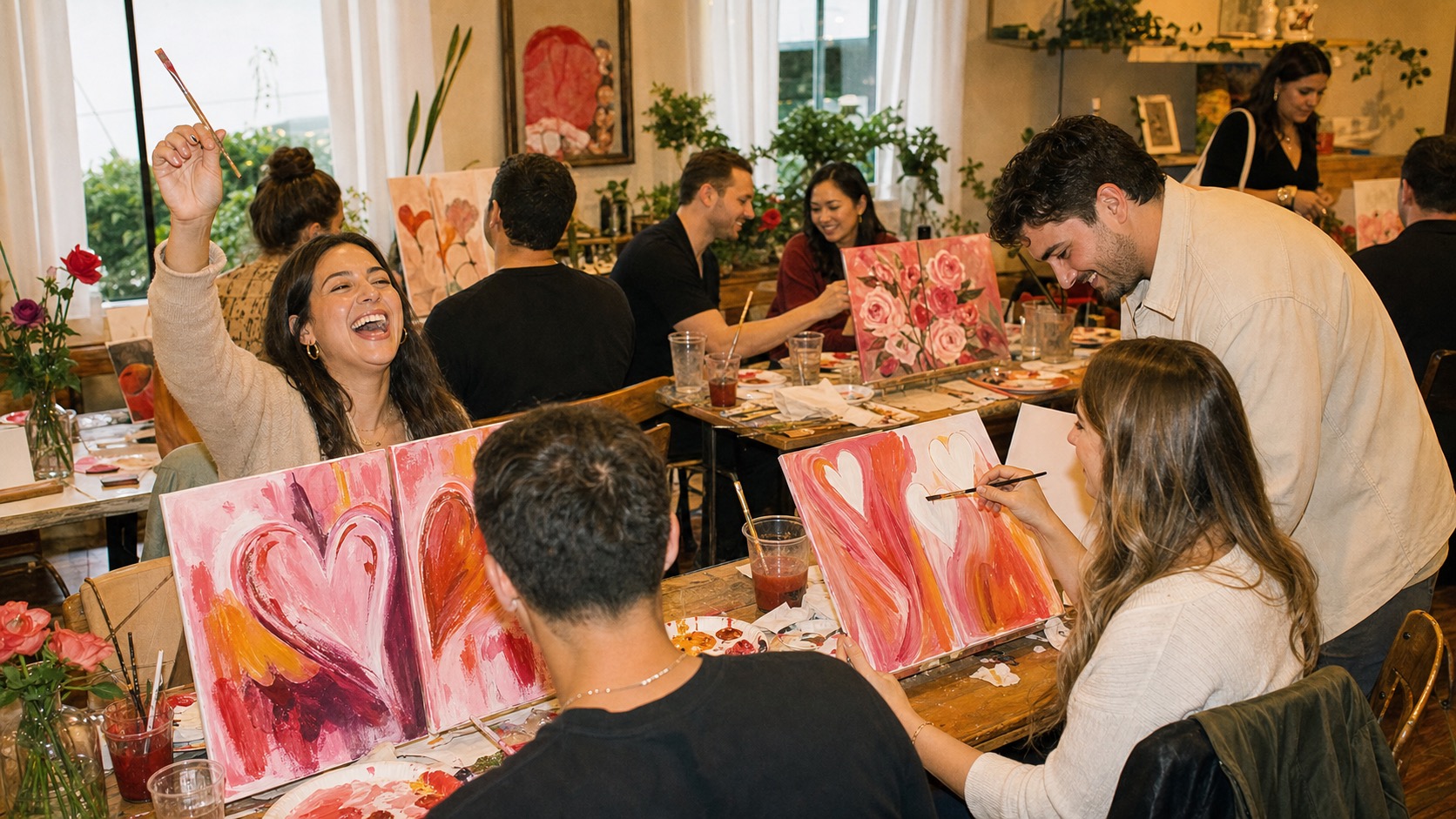
Splatter paint studios and classic paint and sip classes are not the same business with different decor.
They both sell a creative night out, but the customer expectation is different. Classic paint and sip is guided, social, and outcome-oriented. Splatter painting is more physical, expressive, and photo-friendly.
That difference matters for customers choosing a night out, and it matters even more for owners deciding what kind of experience to build.
What customers are really buying
A classic paint and sip customer usually wants structure. They want to know what they will paint, when the class starts, whether drinks are allowed, and whether a beginner can keep up.
A splatter paint customer is usually buying the feeling of release. The finished canvas matters, but the photos, music, room setup, protective gear, and group energy matter just as much.
For date nights and birthdays, both formats can work. For corporate teams, private groups, and tourists, the right answer depends on whether the buyer wants a guided class or a more immersive activity.
That is the first thing a directory page should respect. "Creative night out" is not one buyer intent. It is a family of intents. A guided class, a pet portrait, a splatter room, and a private mobile party all need different promises.
How the operations differ
Classic paint and sip is built around instruction. The owner needs calendar management, theme selection, instructor workflow, supply setup, capacity, payments, and reminders.
Splatter painting adds another layer: room protection, cleanup time, safety rules, protective clothing, drying or packaging logistics, and stronger waiver language.
That can make splatter studios more operationally intense, but also more shareable. A room designed for photos can create its own marketing loop.

The classic format still has power
Classic paint and sip is not old news. It is familiar, easy to understand, and beginner-friendly.
That familiarity helps customers. They know they will sit, follow an instructor, paint a sample project, chat with friends, and leave with a finished canvas. For date nights, birthdays, fundraisers, and casual outings, that is still a strong offer.
The studio owner's job is to keep the calendar from feeling stale. Theme choice matters. So does pacing, photo moments, instructor energy, and follow-up. A classic format can still feel fresh when the studio treats programming like a product, not a random list of paintings.
Splatter is more like an experience room
Splatter painting behaves more like a room-based attraction.
Customers may book for the chaos, the photos, the novelty, or the feeling of doing something they cannot do in their apartment. The studio has to manage safety, mess, timing, and cleanup with more care.
That means splatter pricing should not be judged only by canvas and paint cost. The room turnover, protective gear, staff oversight, and cleaning time all count. If the studio ignores that, the format can look profitable while quietly eating the calendar.
What this means for pricing
Classic paint and sip pricing often follows seat economics: ticket price multiplied by class capacity, plus add-ons or drinks where allowed.
Splatter pricing can behave more like an experience package. Customers may pay for room time, canvas size, paint upgrades, group packages, or private-session access.
The owner should not price either format only by supplies. The real product is the hosted experience.
For classic classes, the price should reflect instruction, room time, materials, and the social night. For splatter, the price should also reflect the room reset, protective gear, and cleanup. The boring costs are still costs.
Which format fits which buyer?
Classic paint and sip is usually strongest for:
- Beginners who want guidance.
- Date nights that need a relaxed plan.
- Birthday groups that want a finished project.
- Fundraisers with mixed ages and skill levels.
- Corporate groups that want structure.
Splatter can be strongest for:
- Tourists and locals who want a photo-friendly activity.
- Teens, friend groups, and high-energy birthdays.
- Private sessions where the room itself is the draw.
- Customers who want novelty more than instruction.
- Groups that want movement instead of a seated class.
Neither is better in every case. The move is to know which buyer you are serving.
Where directories need to be smarter
Most local directories flatten these formats into one category. That is not helpful.
A customer searching for a BYOB painting class, a Paint Your Pet workshop, or a splatter room is expressing a different intent. paintandsip.co should separate those intents so the customer lands on the right kind of listing.
That is why the directory tracks real formats, city-intent pages, and studio-specific claims instead of publishing generic listicles.
The public version should feel simple: find studios by city, occasion, and format. The research notes can keep the receipts.
The owner decision matrix
If an owner is choosing between classic paint and sip and splatter, the best question is not "which one is hotter?"
The better question is: what can your space and team run beautifully every week?
Classic paint and sip is usually easier to start because the room setup is simpler and the customer expectation is familiar. The harder part is keeping programming fresh enough that regulars come back.
Splatter can feel more distinctive and more photo-friendly, but it needs a room that can handle mess, reset time, protective gear, safety rules, drying logistics, and stronger staff oversight. If the studio does not price that correctly, the novelty can eat the margin.
So the matrix is simple:
- If you have strong instructors and flexible seating, classic classes may be the better base.
- If you have a protected room and strong reset process, splatter can be a premium lane.
- If you have both, separate the booking paths so customers know exactly what they are buying.
Safety and policy are part of the product
Splatter especially needs grown-up policy language.
Customers need to know what to wear, whether protective gear is included, whether paint washes out, what ages are allowed, what happens with wet canvases, and whether waivers are required. This is not a fun-killer. This is how the fun stays fun.
Classic classes need policy clarity too: late arrivals, cancellation windows, BYOB rules, food policy, age minimums, and whether guests can sit together.
The page should make those rules visible before checkout. Nobody wants to learn about a paint-splattered shoe rule at the front desk.
How to describe each format
Use different copy because the buyer is different.
For classic:
"A guided paint night for beginners, date nights, birthdays, and friend groups. We provide the canvas, supplies, instruction, and cleanup. You bring the people."
For splatter:
"A private, high-energy paint room where your group creates abstract canvases with protective gear, music, and plenty of photo moments. Best for birthdays, friend groups, teens, and anyone who wants a mess they do not have to clean."
Those two offers are close cousins, not twins.
What to track
Track classic and splatter separately.
Look at average ticket value, room reset time, staff hours, private-event conversion, refund issues, repeat bookings, and social sharing. If splatter creates lots of photos but low repeat booking, it may be a tourist or novelty lane. If classic classes create repeat guests but slower sellouts, the programming calendar needs more spark.
Both can be good. The owner just needs to know what each one is doing for the business.
When to say no
Some formats should not be added yet.
If the room cannot be cleaned quickly, do not add splatter. If the team does not have confident instructors, do not make classic classes more complex. If the waiver, age rules, or protective gear are fuzzy, do not sell high-energy private sessions until the rules are grown-up.
Saying no is not unambitious. It is how the owner protects the customer experience. A smaller offer that runs beautifully is worth more than a trendy offer that makes the staff dread Saturday.
The best format is the one customers understand, staff can repeat, and the owner can price honestly. That is not boring. That is how the fun stays profitable.
What the booking flow needs
Both models need more than a basic checkout button.
The owner needs clean scheduling, capacity, private-event handling, customer reminders, refund rules, add-ons, and a way to keep studio operations from spilling into text messages and spreadsheets.
Classic paint and sip and splatter studios may look different to customers, but both are experience businesses. The booking flow should protect the experience from the messy little details that customers never see.
The owner takeaway
Do not choose a format because it photographs well for someone else. Choose it because your space, staff, pricing, cleanup plan, and customer demand can support it.
Classic classes need strong programming. Splatter rooms need strong operations. Both need clear booking paths. If the customer knows what kind of night they are buying, the page is already doing better than half the internet.
Sources
These sources ground the editorial examples. They do not imply the listed studios use Painta unless a profile is marked Painta-powered.
- Los Angeles paint and sip studios
Los Angeles directory listings include classic, private-party, and splatter-style experience formats.
- Private paint party directory
Private-event listings support the comparison between guided classes and more immersive group formats.
- The Splatter Studio LA listing
Directory profile used as a concrete example of the splatter-studio format.
- Class theme strategy guide
Owner guide used for the programming, theme-selection, and customer-intent recommendations.