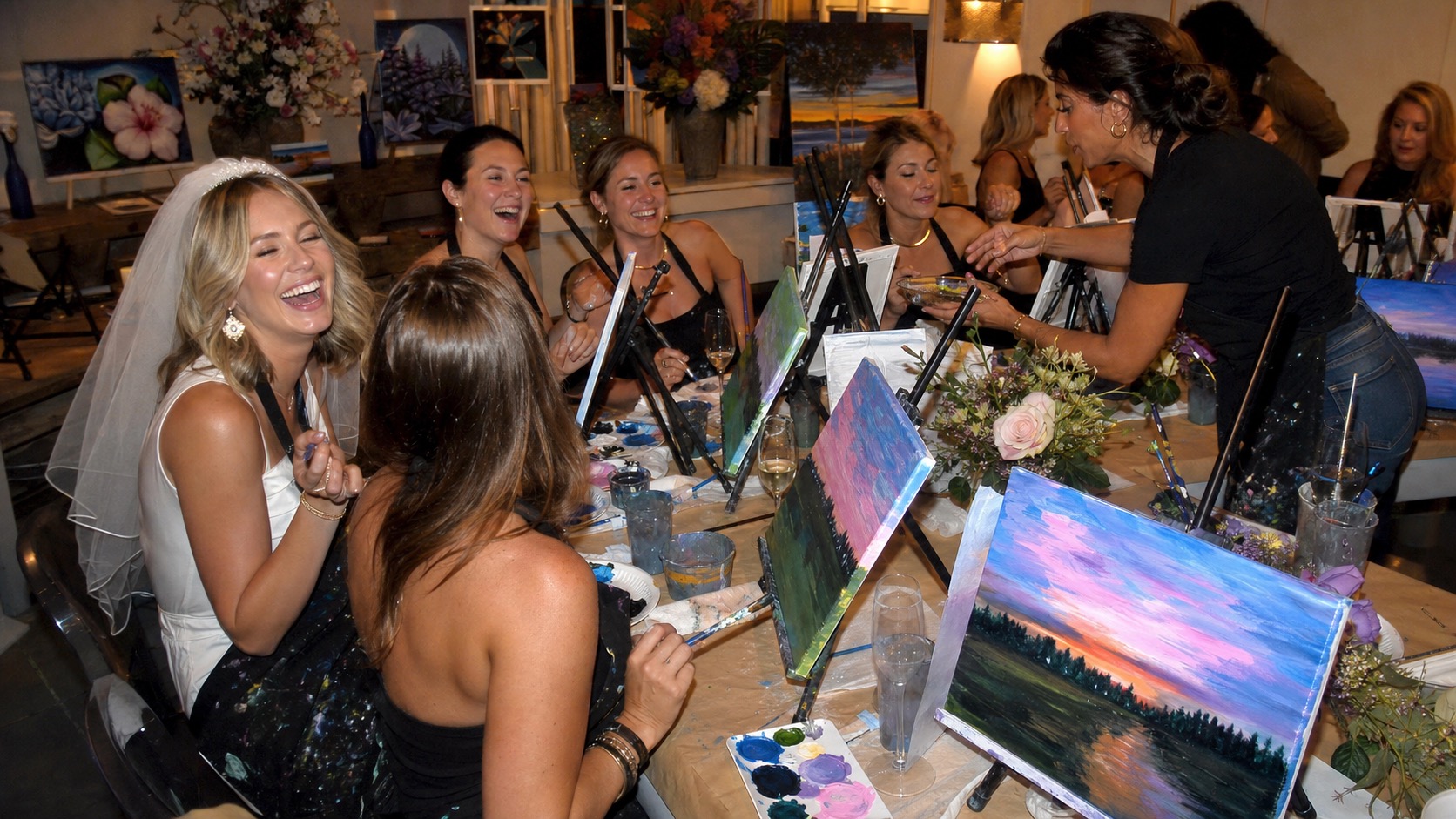
Private events are often the cleanest revenue lane for a paint and sip studio because the owner is not selling one seat at a time.
A birthday party, team event, bachelorette night, fundraiser, or family celebration can become one larger booking with a clearer date, a clearer headcount, and a clearer reason to pay a deposit.
That does not mean public classes stop mattering. Public classes create discovery. Private events create revenue concentration. The best studios need both, but they should not manage both as if they are the same product.
Why private events behave differently
A normal public class depends on filling seats across many small decisions. Each guest has to notice the event, like the theme, be free that night, and book before the class loses momentum.
A private event starts with a group that already has intent. The host has a date, a reason to gather, and a job to get done.
For the owner, that changes the business mechanics:
- One inquiry can represent 10, 20, or 40 guests.
- The event can support a minimum spend or deposit.
- Staff can plan supplies, templates, and room setup with more certainty.
- The customer is more likely to need follow-up for birthdays, holidays, or future team events.
The full scoop: a private-event buyer wants certainty. They want to know the date can be held, the group will fit, the price will not become mysterious, and nobody will look silly in front of the guests.
What the best studios make clear
A strong private-event page should answer the buyer before they have to email:
- What group sizes the studio can host.
- Whether the studio offers mobile events, in-studio events, or both.
- What occasions fit best: birthdays, corporate teams, kids parties, bachelorettes, fundraisers, or family nights.
- Whether food, drinks, BYOB, or catering are allowed.
- How deposits, cancellation rules, and final headcount deadlines work.
The goal is not to publish every operational detail. The goal is to remove enough uncertainty that a serious buyer feels safe submitting the inquiry.
That means the page needs more than "we host private parties." It should say what kinds of parties the studio handles, how to start, whether a deposit is required, and when the final guest count is due. The owner can still customize the quote later. The public page just needs to make the first step feel safe.
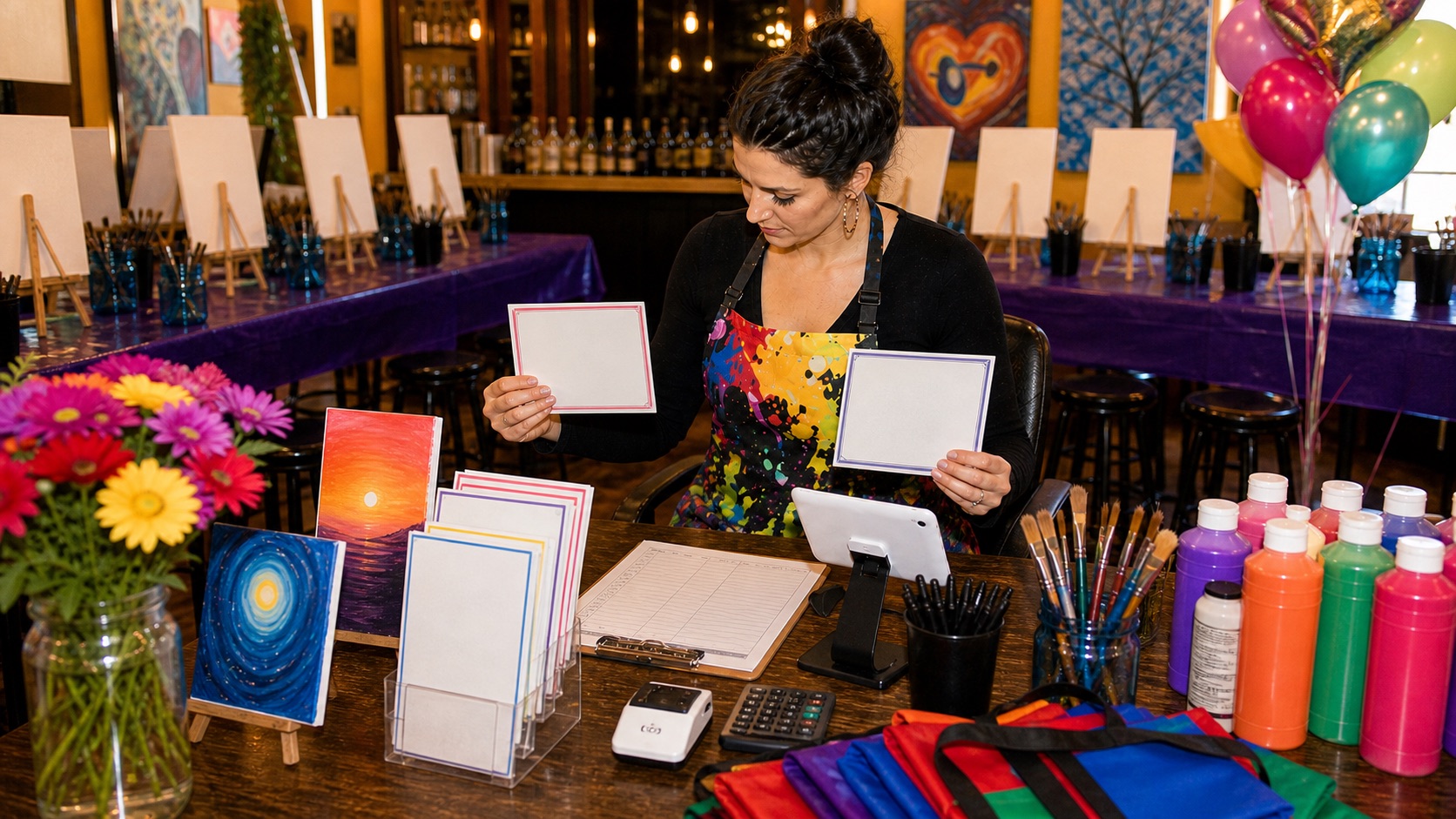
The package menu
Private events sell better when the buyer can picture the offer.
That does not mean every studio needs 19 package tiers. In fact, please do not do that to yourself. A simple three-lane menu usually works better:
- In-studio private party for birthdays, friends, and family groups.
- Corporate or team event with invoice-friendly language.
- Mobile or offsite event if the studio can travel.
Each lane should include the minimum group size, timing, what is included, and the best next step. Buyers like options, but they love clarity.
Deposits are not rude
Deposits protect the studio's calendar.
A private event blocks time, staff, supplies, and sometimes a whole room. If the buyer can cancel casually with no commitment, the owner carries all the risk. A deposit tells both sides: this is real.
Best practice is to state the deposit rule before the inquiry gets too far. The studio can still be kind. It can still handle emergencies. But the baseline should be clear: deposit due to hold the date, final headcount due by a set deadline, balance due before or on event day, and cancellation terms visible before payment.
Follow-up is the money leak
The easiest private-event revenue to lose is the inquiry that sounded promising and then went quiet.
Sometimes the buyer got busy. Sometimes they needed a quote to forward. Sometimes they asked three venues and booked the one that replied fastest. This is not personal. It is just how planning works.
Studios should use a simple follow-up sequence:
- Reply with a clear package or quote.
- Send the deposit link or next-step question.
- Follow up after 24-48 hours.
- Send a final "want me to hold this date?" note.
- If they do not book, invite them back for public classes or gift certificates.
That sequence feels calm to the customer and protects the owner from the tiny panic spiral of remembering leads manually.
Why generic booking tools struggle here
Private events are not just appointments.
They involve a sales conversation, a quote, a deposit, a tentative hold, staff planning, customer notes, payment timing, and often a different cancellation policy than public classes.
If the owner is managing those details across email, spreadsheets, payment links, and a personal calendar, good leads can get lost. The customer experience also feels less premium than the event itself.
What customers should feel
The customer should feel like the studio has done this before.
That does not require stiff corporate language. It requires a page that says, "Yes, we host birthdays, bachelorettes, team nights, and fundraisers. Here is how it works. Here is the deposit. Here is what we need from you. Here is how to start."
Warm plus clear is the sweet spot.
The high-value private-event page spec
For this audience, the best private-event page should help the buyer decide without a long email chain.
It should include:
- A one-sentence offer: who it is for and what the studio handles.
- Best-fit occasions: birthdays, bachelorettes, corporate teams, fundraisers, school groups, family nights.
- Group-size range and minimum spend.
- Package lanes, not a giant custom menu.
- Deposit rule and final headcount deadline.
- Food, drink, BYOB, catering, or venue policy.
- Mobile/offsite availability if offered.
- A clear inquiry button.
- Response-time promise.
- A next-step note after inquiry.
This page does not need to reveal every price. It does need to make the buyer feel safe enough to ask.
The inquiry reply that closes faster
The first reply should not be a vague "thanks, what are you looking for?"
Try this structure:
"Hi! We would love to host this. Based on your date and estimated headcount, the best fit is our in-studio private party package. It includes guided instruction, all supplies, setup, cleanup, and a private table/room depending on group size. To hold the date, we require a deposit, with final headcount due one week before the event."
Then ask only the questions you truly need:
- Preferred date and backup date.
- Estimated guest count.
- Occasion.
- In-studio or offsite.
- Food/drink needs.
- Any accessibility or timing notes.
The buyer should feel like the studio knows the road. She should not have to draw the map.
The numbers owners should watch
Private events can feel busy without being profitable. The receipts are in the numbers.
Track inquiry-to-deposit conversion, average group size, average revenue per event, staff hours, cleanup time, refund/cancellation rate, and repeat bookings after the event. Also track which occasions bring the best-fit customers.
A bachelorette party, corporate event, and kids birthday may all be private events, but they do not behave the same. One may need more staff. One may need clearer food rules. One may create better repeat customers. The calendar will tell on you if you listen.
The policy language should be boring
Policy copy is not the place to be adorable.
Use plain language:
"A deposit is required to hold your private-event date. Final headcount is due seven days before the event. If your group size changes after that deadline, we will do our best to help, but the final balance may not decrease. Cancellations and reschedules are handled according to the policy shared before deposit payment."
That is not mean. It is clear. Clear is kind when someone is planning a group event.
When to raise the price
Private events should get more expensive when they create more work.
Raise the quote when the group needs a private room, offsite setup, extra staff, custom project prep, complex food or drink logistics, premium materials, late-night timing, or a faster turnaround. Do not make the base package carry every special request.
The clean way to say it: "Custom projects, offsite events, and premium add-ons may change the final quote." Simple. Nobody faints.
The studio owner should not apologize for charging for real labor. The customer is buying a hosted event, not a pile of canvases.
What the booking flow needs
A private-event booking flow should make the whole path visible.
The customer needs to know what happens after the inquiry. The owner needs to see the date, package, deposit, guest count, balance, notes, deadlines, and follow-up. Staff need to know what to set up.
This is the unglamorous part that makes the event feel polished. The buyer sees a calm path. The studio sees what is real, what is pending, and what needs a nudge.
That is the whole point: fewer mystery emails, fewer lost leads, and fewer Friday-afternoon surprises.
The owner takeaway
Private events are not a side note. For many studios, they are the grown-up revenue lane.
Give them a real page, a real deposit policy, a real follow-up flow, and a real booking system. The calendar will tell on you if you do not.
Sources
These sources ground the editorial examples. They do not imply the listed studios use Painta unless a profile is marked Painta-powered.
- Private paint party directory
Directory private-party listings show how studios position group bookings and private events.
- Private paint party owner guide
Owner-side guide that supports the article's deposit, package, and inquiry workflow recommendations.
- Corporate proposal generator
Working owner tool showing how vague private-event demand turns into a structured proposal workflow.
- Private event deposit policy guide
Owner guide used for the deposit, final headcount, and cancellation-policy recommendations.