
A sold-out watercolor workshop usually starts with one very clear promise.
Not "come make art." That is too vague. The better promise is specific: loose florals, coastal postcards, holiday gift tags, watercolor pet silhouettes, botanical cards, or a beginner landscape you can actually finish in one sitting.
Watercolor can feel premium, soft, and giftable. It can also turn into a tiny panic spiral if the project is too advanced, the paper buckles, or the instructor spends the whole class rescuing muddy paint. The move is to design the workshop for beginners from the start.
Pick a project that forgives people
Watercolor looks delicate, but the class plan should be sturdy.
Choose projects with simple shapes, limited colors, and room for personal variation. Loose florals work because imperfect petals still look intentional. Coastal washes work because the color blend does half the beauty. Gift tags and cards work because the format is small and finishable.
Avoid tiny lettering, realistic faces, complicated architecture, or anything that requires a perfect first try. That kind of project might look gorgeous on Instagram, but it is not kind to a room full of beginners.
Best practice: test the project with someone who is not an artist. If they cannot finish it in the planned time with a little chatting and snack energy, simplify.
Sell the vibe, then show the details
The workshop page should make the customer feel the night first: soft colors, relaxed instruction, pretty paper, everything included, no experience needed.
Then it should immediately answer the booking questions:
- Date and start time.
- Workshop length.
- What guests will make.
- What supplies are included.
- Whether drinks or snacks are allowed.
- Skill level.
- Cancellation policy.
This is not glamorous, but it sells. Customers are more likely to book when they can picture the night and trust the logistics.
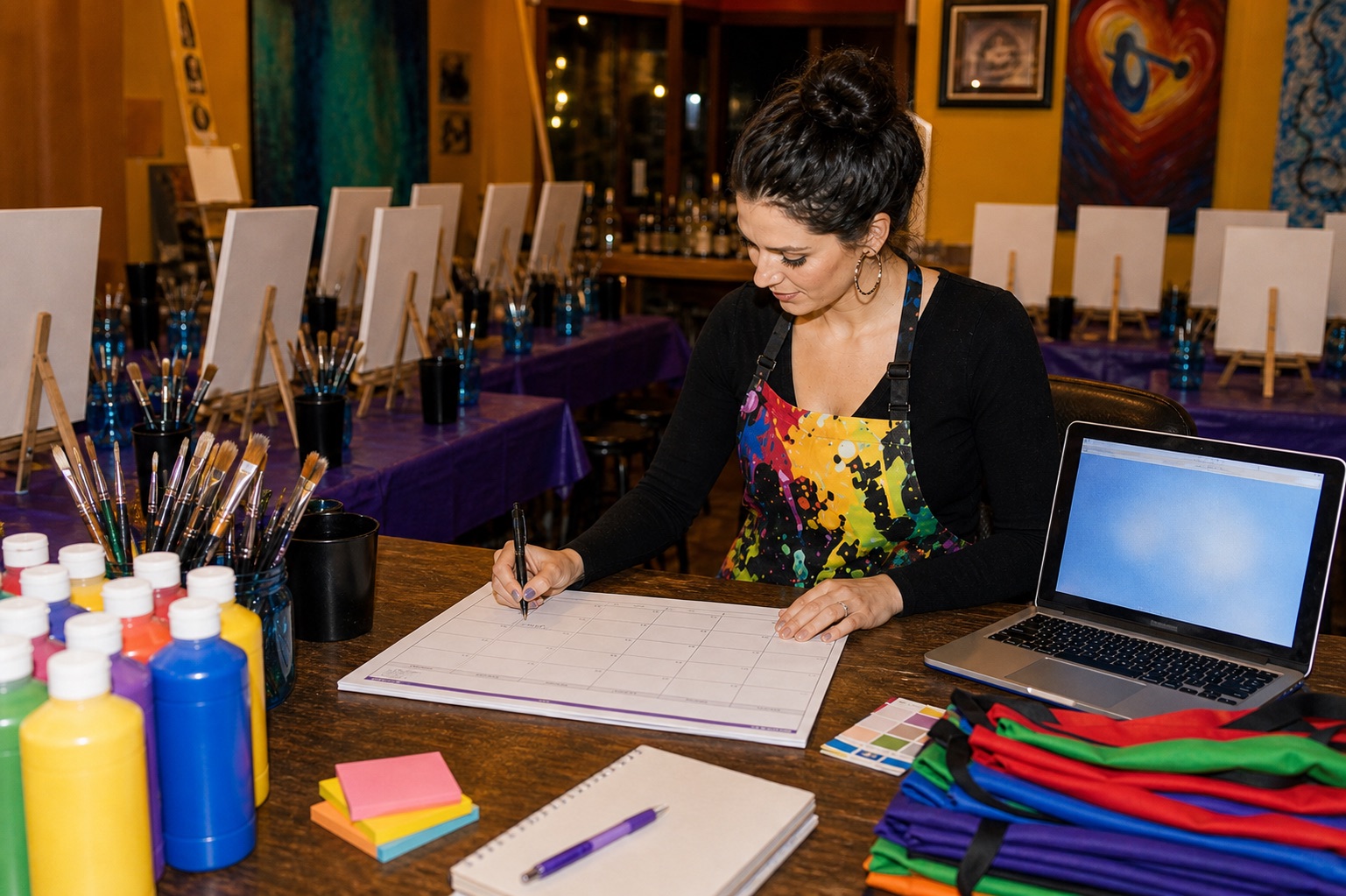
Price it like a workshop, not a filler class
Watercolor supplies can be modest, but the instructor prep is real.
The price should account for paper, brushes, pigment, palettes, water cups, drying space, table protection, instructor time, setup, cleanup, and booking fees. If the workshop includes premium paper, take-home supplies, frames, envelopes, or gift packaging, say that clearly.
Do not discount the class just because it feels gentle. Gentle can still be premium.
The customer value is not only the finished piece. It is the hosted experience: a calm room, clear instruction, pretty materials, and a project they can finish without feeling silly.
Build a launch rhythm
Watercolor workshops often sell best when the theme matches a moment.
Spring florals, Mother's Day cards, summer postcards, fall botanicals, holiday gift tags, and date-night minis all give customers an easy reason to invite someone. The theme does not need to be wildly original. It needs to be easy to understand and cute enough to share.
Launch the first class with a clear sample image, then invite past guests who like calmer formats. If the first date fills, add a second date nearby. Do not spray five dates onto the calendar before you know the demand. The calendar will tell on you.
Set up the room for fewer interruptions
Watercolor needs a slightly different room flow than acrylic paint night.
Guests need clean water, paper that stays put, space for wet work, and a place to set brushes without knocking them into a drink. The instructor needs a demo area people can actually see. If the project has drying steps, the class needs breathing room.
Tiny details help:
- Pre-tape paper if the project needs clean borders.
- Put extra paper towels on every table.
- Use limited palettes to avoid muddy color.
- Keep a few rescue examples ready.
- Build in a short drying or snack break.
This is the boring bit, but it is also what makes the workshop feel polished.
Write reminders that protect the night
Reminder emails should be short and useful.
Tell guests when to arrive, what is included, what to wear, whether food or drinks are allowed, and how to contact the studio if they need help. If seating is limited or the workshop is sold out, remind them about the cancellation rule too.
The tone can stay warm. "We are setting up your watercolor table now" feels better than "your appointment is tomorrow." The customer bought a night out, not a dental cleaning.
Capture the repeat booking
Watercolor is a great repeat-customer format because it can turn into a series.
Guests who enjoy loose florals may come back for botanicals, holiday cards, postcards, or beginner landscapes. After the class, send a thank-you note with the next related workshop. Do it quickly, while the customer still remembers the nice feeling.
Try it your way: "Loved the watercolor table? Our next beginner workshop is coastal postcards on Thursday. Same calm energy, new project."
That is not spammy. That is helpful if the guest had a good time.
The supply list that keeps it premium
Watercolor workshops rise or fall on materials.
The studio does not need the fanciest everything, but it does need supplies that behave well for beginners. Use paper that can handle water, brushes that hold a point, pigments that do not turn instantly sad, clean palettes, painter's tape if needed, extra paper towels, water cups, table covers, and drying space.
If the class includes a take-home piece, think about how it leaves the room. Envelopes, sleeves, cardboard backing, or simple packaging can make the finished project feel more giftable. Tiny detail, big difference.
This is where premium lives: not in making the project harder, but in making the whole night feel handled.
The instructor run of show
A watercolor workshop needs pacing.
A simple run of show:
- Welcome and show the finished sample.
- Explain the three techniques guests will use.
- Let guests test color on scrap paper.
- Demo the first layer.
- Paint the first layer together.
- Take a short drying break.
- Demo details or second layer.
- Finish with optional personal touches.
- Give a photo moment and care instructions.
The instructor should not lecture for 25 minutes before guests touch paint. Watercolor comfort comes from trying quickly, then adjusting.
The workshop page copy
Try it your way:
"Join us for a beginner-friendly watercolor workshop where you will paint loose florals on premium paper. We provide the supplies, step-by-step guidance, and a calm little table setup. No experience needed. You will leave with a finished piece that is pretty enough to gift, frame, or casually brag about."
That copy works because it says the project, the skill level, the materials, and the outcome. It sells the feeling without hiding the details.
For the policy note:
"Watercolor tables are limited so every guest has room to work. Please arrive 10 minutes early. Tickets are non-refundable inside the cancellation window, but we will always try to help with reschedules when we can."
Clear, warm, adult.
The upsell that does not feel gross
Watercolor has gentle add-on potential.
Offer a frame, extra card set, mini take-home paint kit, envelope bundle, or gift packaging. Keep it optional and easy. The add-on should make the finished piece more useful, not make the checkout feel like a checkout lane at a craft store.
The best upsell is the next class. If someone loved beginner florals, invite them to coastal postcards, holiday cards, or botanicals. A series makes the customer feel like she is learning, not just buying another random night.
The sold-out signal
A sold-out watercolor workshop is useful data.
If it sells out because the project is pretty, keep the theme family going. If it sells out because the time slot is good, test another calm workshop in the same slot. If it gets lots of saves or comments but low bookings, the page may need clearer pricing, supplies, or skill-level language.
Do not turn one sold-out class into ten dates overnight. Add one more date, watch the booking pace, and keep the room quality high. Scarcity can help. Over-scheduling can make the same lovely idea feel ordinary by next Tuesday.
Also watch who books. If the class attracts pairs, make it a date-night lane. If it attracts mums and daughters, build a family or Mother's Day version. The customer is quietly telling you what to sell next.
What the booking flow needs
The owner should not have to manage workshop capacity, payment status, reminders, cancellations, and follow-up in five places.
A workshop booking flow should keep ticketing, capacity, reminders, customer notes, repeat-customer history, and follow-up together. The customer gets a smoother night. The studio gets fewer loose ends.
The owner takeaway
A watercolor workshop sells when it feels pretty, beginner-safe, and clearly planned.
Pick a forgiving project. Price the prep. Make the page obvious. Protect the room flow. Follow up with the next soft, lovely thing.
That is how a gentle class becomes a real calendar lane.
Sources
These sources ground the editorial examples. They do not imply the listed studios use Painta unless a profile is marked Painta-powered.
- Weekly class calendar guide
Owner guide used for calendar pacing, launch timing, and repeat-programming recommendations.
- Class theme strategy guide
Owner guide used for the theme-selection and beginner-friendly project guidance.
- Ticket pricing guide
Owner guide used for the pricing, supplies, and margin recommendations.
- Painta owner platform
Referenced as the booking and operations layer for class capacity, payments, reminders, and repeat-customer follow-up.